Ukulele – Module 1
Lesson 3 - Chord of F major
About this resource
In this lesson students will:
- Perform a Body Percussion warm up to help focus your attention ready for learning
- Learn how to play the chord of F major on ukulele using call & response and rhythm patterns
‹ Back to LearnToPlay Ukulele (Curriculum)
‹ Back to LearnToPlay Ukulele (Standalone)
Key Information
Warm-Up
Limber up with a Body Percussion Playalong to help you focus at the start of the lesson. In this warm-up, play along to In The Hall Of The Mountain King by Edvard Grieg.
Clap Only
Clap along to each of the rhythms in the video below. Play each rhythm 8 times before moving on to the next.
Once you’ve mastered clapping, you could try an alternative body action, like finger snaps, stomps, pats or nods.
Learn F major
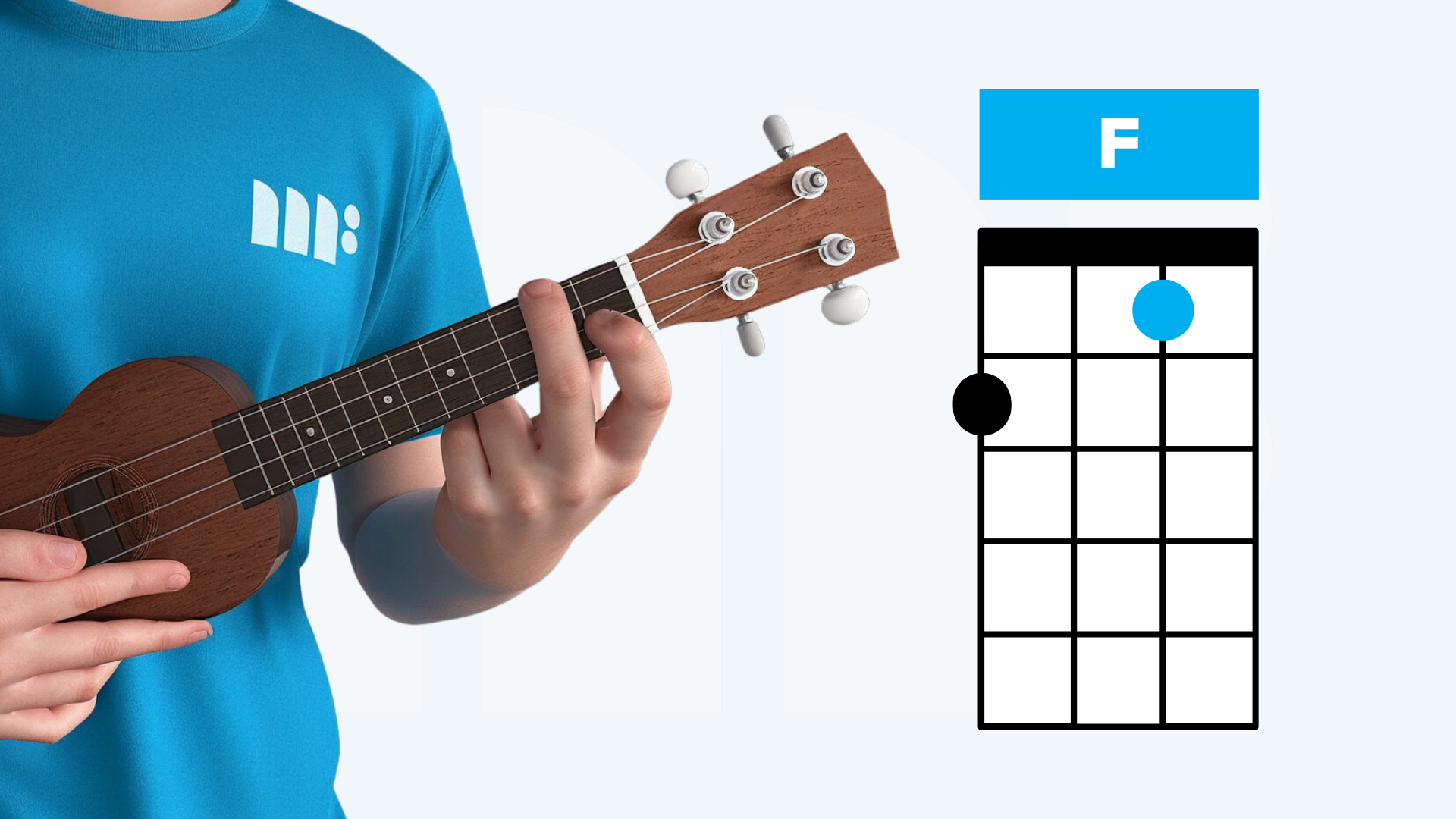
Look closely at the image below and try to match it.
To help get to grips with the chord of F, try playing the chord to the audio track below:
- Play the chord on beat 1 of every bar (1 rest rest rest)
- Play the chord on every beat of every bar (1 2 3 4)
- Call & response – with your teacher taking the lead, play the F backing track and copy the rhythms that your teacher plays
- Alternatively, you could work in pairs. Can you copy the strumming pattern that your partner plays using the chord of F?
Rhythm Patterns
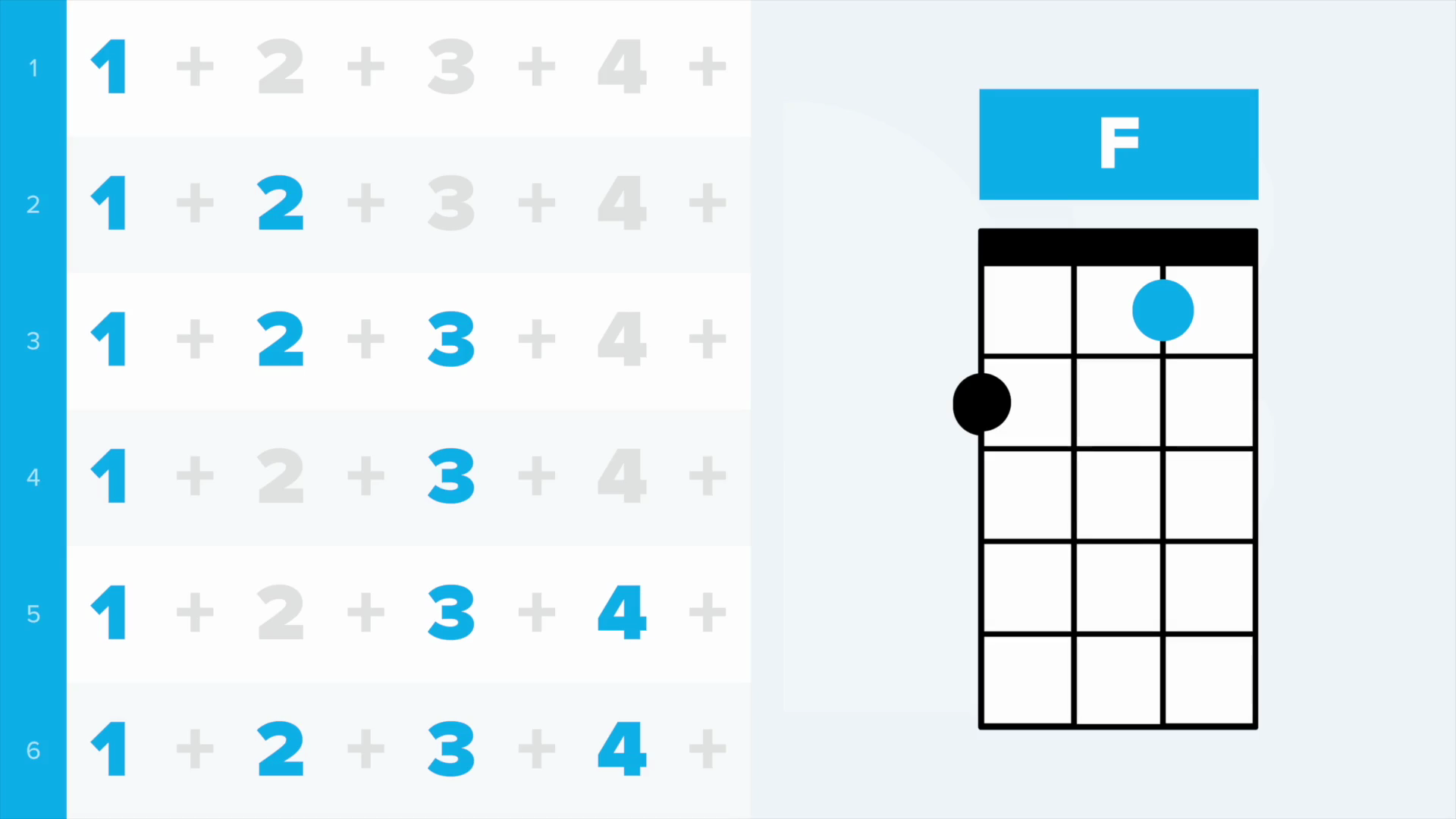
Can you now try strumming the chord of F to the rhythms highlighted in the videos below?
The audio in the Rhythm Practice video contains a click track and ukulele strums that match the rhythms. Play each rhythm 8 times before moving on to the next.
Then, focussing on the same rhythms, use the Rhythm Performance video to try and play the chord in time to the backing track without the ukulele guide sounds.
Rhythm Practice
Play to a click track and ukulele guides only
Rhythm Performance
Play to the backing track without ukulele guides
Compose Your Own Rhythm
Use the interactive notation builder below to create your own rhythms! Perform your rhythms to the backing track.
Reset
Download as Image
Check for Errors
X
1
X
and
X
2
X
and
X
3
X
and
X
4
X
and
Unfortunately our rhythm builder cannot be used on small screens. Please use a desktop, laptop or large tablet (such as an iPad) to view it.
Browse more resources
Explore our extensive range of curriculum resources to deliver practical, authentic and relevant music lessons that effectively engage all pupils in learning music